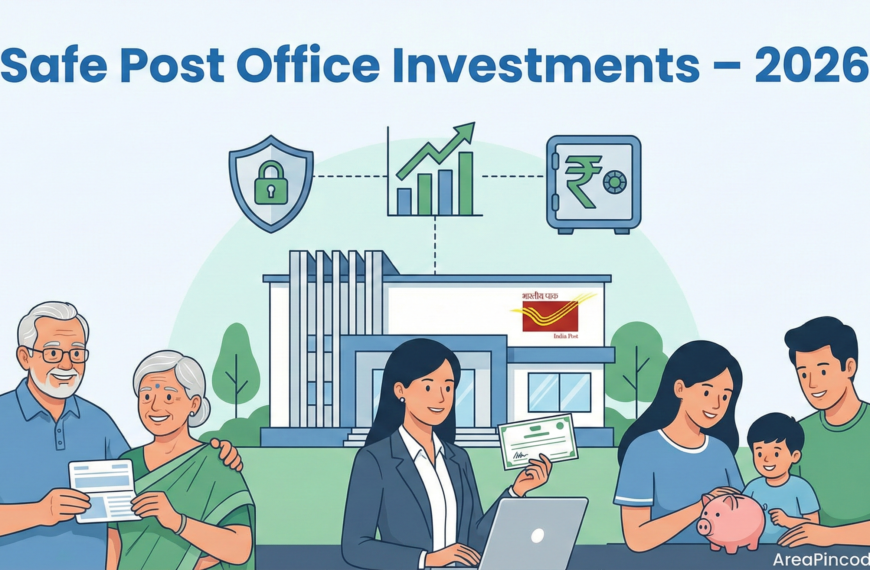

Senior citizens often shift their investing focus from aggressive growth to capital preservation, regular income, and low risk. For millions of Indian retirees, post-retirement financial planning is not just about returns — it’s about security, predictability, and peace of mind. In 2026, post office savings schemes continue to be one of the safest avenues for senior citizens to park their money, backed by the Government of India.
Unlike stock markets or private investment instruments, post office schemes are government-guaranteed, easy to understand, and accessible even in rural areas. For many seniors, they form the core of retirement planning, providing steady income and tax efficiency.
In this comprehensive guide, we explore the best post office schemes tailored for senior citizens in India, their features, benefits, eligibility, how they work, and how to choose the right mix for your financial goals — all explained in simple, search-friendly language.
1. Senior Citizen Savings Scheme (SCSS)
What is SCSS?
The Senior Citizen Savings Scheme (SCSS) is the most widely recommended government savings option for Indians aged 60 years and above. It is designed to provide regular income and capital security for retirees.
Key Features of SCSS
- Eligibility: Indian citizens above 60 years; early retirees (55+) under certain conditions
- Tenure: 5 years, extendable by an additional 3 years
- Interest Payout: Quarterly
- Government Backed: Yes — sovereign guarantee
- Minimum Investment: ₹1,000
- Maximum Investment: ₹30 lakh
Why SCSS is Ideal for Senior Citizens
- High Interest Rates: SCSS typically offers interest rates that are higher than bank fixed deposits for senior citizens.
- Steady Monthly/Quarterly Income: With quarterly payouts, many retirees prefer SCSS for recurring income.
- Safety: Capital and interest are managed by the government, eliminating default risk.
- Tax Benefits: Investment qualifies for deduction under Section 80C of the Income Tax Act, subject to limits.
How SCSS Works
Suppose a retiree invests ₹10 lakh in SCSS at an interest rate of 8% per annum. The interest is paid quarterly, providing a regular income stream without exposing the principal to market risk.
Things to Remember
- Premature withdrawal is allowed, but subject to penalties depending on when the withdrawal occurs.
- The scheme is especially useful for conservative investors needing predictable income.
2. Post Office Monthly Income Scheme (MIS)
What is MIS?
The Post Office Monthly Income Scheme (MIS) provides guaranteed monthly interest payouts to investors. While not exclusive to seniors, it is often used by retirees as a reliable source of fixed monthly income.
Key Features of MIS
- Eligibility: Indian residents (no age limit)
- Tenure: 5 years
- Interest Payout: Monthly
- Government Backed: Yes
- Minimum Investment: ₹1,000
- Maximum Investment: ₹4.5 lakh (single account) / ₹9 lakh (joint account)
Why MIS is Suitable for Seniors
- Monthly Cash Flows: MIS pays interest every month, making budgeting easier.
- Capital Safety: Government backing ensures the principal amount is secure.
- Simplicity: No complex terms or market exposure.
How MIS Works
If a retiree invests ₹4.5 lakh in MIS at an interest rate of 7.5% per annum (example rate), the monthly interest payout becomes an additional retirement income.
3. Public Provident Fund (PPF)
What is PPF?
The Public Provident Fund (PPF) is a long-term savings scheme with a 15-year tenure, best suited to building a retirement corpus or legacy planning. While often used by younger investors, PPF also benefits senior citizens aiming for long-term tax-efficient growth.
Key Features of PPF
- Eligibility: Indian citizens (no upper age limit)
- Tenure: 15 years (extendable)
- Interest: Compounded annually
- Tax Benefit: Under Section 80C
- Interest Earnings: Tax-free
- Investment Range: ₹500 – ₹1.5 lakh per year
Why PPF Matters for Seniors
- Lifetime Investment Option: Even seniors can open PPF accounts.
- Compound Growth: Tax-free compounding over years builds a sizeable corpus.
- Legacy Planning: PPF account can be nominated to family members.
Things to Consider
Although PPF has a long lock-in period, extensions can be done in blocks of 5 years. This makes it less liquid but excellent for legacy savings.
4. National Savings Certificate (NSC)
What is NSC?
The National Savings Certificate (NSC) is a fixed-income tax-saving instrument that is widely used for safe saving and tax planning under Section 80C.
Key Features of NSC
- Eligibility: Indian residents
- Tenure: 5 years
- Government Backed: Yes
- Tax Benefit: Under Section 80C (principal)
- Compounded Annually (Interest reinvested)
Why NSC Is Useful for Senior Citizens
- Tax Savings: NSC offers tax benefits while ensuring guaranteed returns.
- Security: Government backing ensures full security of capital.
- Structured Saving: Annual compounding increases effective return.
How NSC Works
Interest earned on NSC is reinvested until maturity, and the principal investment qualifies for tax deduction. Although the interest component is taxable, the scheme’s security and simplicity make it a reliable choice.
5. Sukanya Samriddhi Yojana (SSY)
What is SSY?
The Sukanya Samriddhi Yojana (SSY) is a savings scheme for the girl child, backed by the Government of India. While strictly a child-oriented scheme, senior citizens investing on behalf of grandchildren can include SSY in their financial planning.
Key Features of SSY
- Eligibility: Guardian of a girl child (under 10 years of age)
- Tenure: Up to 21 years from the date of opening
- Tax Benefits: Section 80C + tax-free interest
- High Interest Rates: Generally among the highest for government small savings
Senior Citizen Use Case
Grandparents who wish to secure the future education and marriage needs of grandchildren often use SSY as part of inter-generational financial planning.
6. Post Office Day Deposit (POD)
What is POD?
Post Office Day Deposit (POD) is a flexible short-term scheme, ideal for seniors who want a government-backed short lock-in period.
Key Features of POD
- Tenure: 1 to 365 days
- Interest: Varies by duration
- Government Backed: Yes
- Suitable for: Emergency funds, short-term savings
Why POD Can Help Retirees
Retirees may need temporary parking of funds for short periods. POD offers a secure avenue without market risk.
7. Kisan Vikas Patra (KVP)
What is KVP?
Kisan Vikas Patra (KVP) is a fixed-income saving certificate that doubles the investment amount in a predetermined span.
Key Features of KVP
- Lock-in Period: Time for amount to double (varies by rate)
- Government Backed: Yes
- Transferable and Tradable
- Tax Benefit: No for principal, interest taxable
Why Seniors Use KVP
KVP is easy to understand and safe, with predictable doubling, making it a fallback option for conservative investors.
Why Senior Citizens Prefer Post Office Schemes
1. Guaranteed Returns
All these schemes offer guaranteed returns backed by sovereign security, eliminating market risk.
2. No Market Timing Needed
Unlike stocks or mutual funds, post office schemes do not require market timing, technical analysis, or financial expertise.
3. Nationwide Access
With over 1.5 lakh post offices across India — including remote regions — senior citizens everywhere can access these schemes without digital hurdles.
4. Tax Efficiency
Several schemes like PPF, SSY, and part of NSC allow tax deductions under Section 80C, reducing the overall tax burden.
5. Regular Income Stream
Schemes like SCSS and MIS provide monthly or quarterly payouts, aligning well with retiree cash flow needs.
How to Choose the Right Scheme (Practical Tips)
📊 Step 1: Identify Your Priority
- Monthly Income? → MIS, SCSS
- Tax Savings? → PPF, SSY, NSC
- Short-term Parking? → POD
- Child Support? → SSY
📅 Step 2: Match Tenure with Need
Shorter scheme for emergency funds; long term for legacy or retirement corpus.
📝 Step 3: Visit Your Nearest Post Office
Head Office (HO), Sub Office (SO), or Branch Office (BO) — all can open these schemes.
🔄 Step 4: Monitor Interest Rates
Interest rates are revised quarterly by the Government of India. Always verify today’s rates before investing.
Post Office Interest Rates (2026 Snapshot)
Note: Interest rates change quarterly. Check AreaPincodes.com for latest updates.
| Scheme | Current Interest (Example) | Notes |
|---|---|---|
| SCSS | ~8.2% p.a. | Quarterly payouts |
| MIS | ~7.5% p.a. | Monthly payouts |
| PPF | ~7.1% p.a. | Tax-free interest |
| NSC | ~6.8% p.a. | Compounded annually |
| SSY | ~8.4% p.a. | Highest small savings rate |
| POD | Varies | Short-term flexibility |
(These figures are examples — always confirm with official sources.)
Common Myths About Post Office Investments
Myth 1: “They are outdated”
Fact: Government backing and recent digitization keep them relevant.
Myth 2: “Returns are lower than bank FDs”
Fact: Many schemes offer competitive or higher rates, especially for seniors.
Myth 3: “Only old people use it”
Fact: All age groups use small savings for diversification.
Conclusion
For retirees and senior citizens in India, post office savings schemes remain among the most secure and practical investment options in 2026. With government backing, predictable returns, accessibility in every corner of India, and tax benefits, these schemes address the top financial concerns of aging investors: security, stability, and regular income.
Whether it’s SCSS for regular payouts, PPF for long-term growth, or MIS for monthly cash flow, post office options are still highly relevant in modern financial planning.
Before investing, visit your nearest post office or check the latest rates online and ensure that your PIN code and branch details are accurate (use AreaPincodes.com for verification). With the right strategy, senior citizens can enjoy financial peace of mind without compromising on safety or returns.